Yunus Democracy Failure and Bangladesh’s Growing Security Crisis
Yunus Democracy Failure and Bangladesh’s Growing Security Crisis



Introduction
Bangladesh’s political and economic landscape under Muhammad Yunus’s interim government has become a volatile arena marked by uncertainty and deep divisions. The abrupt removal of Sheikh Hasina’s government in 2024 had stirred unrest, with competing political factions vying for power and delaying critical elections. This instability has exacerbated existing economic challenges, including inflation, declining investor confidence and growing public dissatisfaction. More worrying are the controversial moves to lease key infrastructure, such as Chattogram Port, to foreign companies, stirring fears of loss of sovereignty. Concurrently, Pakistan’s ISI influence appears to be amplifying radicalization and militant activities, further destabilizing internal security. Amid rising violence, accusations of political favouritism around Grameen Bank and related entities raise concerns over governance integrity and corruption, casting a shadow over Bangladesh’s fragile democracy and future stability.
Political Fluidity and Election Delays
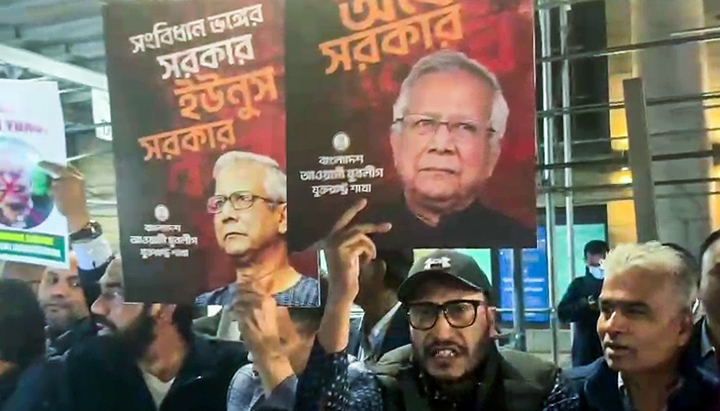
Bangladesh remains under the interim government led by Muhammad Yunus following Sheikh Hasina’s ouster in August 2024, but the present political system faces severe instability. Yunus struggles to assert control as radical insurgencies, political crime and factional conflicts escalate nationwide. The Bangladesh Nationalist Party (BNP) pressures for elections in December 2025, while the National Citizen Party demands structural reforms before voting, intensifying public frustration. Student movements and Islamist factions, including Jamaat-e-Islami, exploit governance gaps, further undermining state authority. The National Consensus Commission falters amid historical political disunity, unable to mediate disputes effectively. Rising unrest and lawlessness reflect Yunus’s limited capacity to stabilize the country, leaving Bangladesh vulnerable to continuing crises and fragmented governance.
Economic Pressures Amid Reforms
Bangladesh's economy has plunged into its worst crisis since independence under Muhammad Yunus's interim government, with GDP growth plummeting to 3.9% in FY2025 from 5.8% in FY2023 and further moderating to 3.3% amid investment declines. Inflation has surged past 12%, up from 5.6% pre-crisis, eroding purchasing power while the ready-made garments sector- once a growth engine- laid off over 150,000 workers, contrasting with prior job additions. Foreign reserves strain under export slumps and energy shortages, youth unemployment exceeds 30% among graduates (from 18% in 2023), and an additional 3 million people face extreme poverty, fuelling brain drain and social unrest as reforms lag. Prolonged political uncertainty risks deeper collapse, deterring investment and sparking protests.
Strategic Port Handovers to Foreign Firms Amid Political Crisis and Protests
On the day of Sheikh Hasina’s trial in late 2024, Muhammad Yunus’s interim government accelerated the controversial handover of key strategic assets to foreign companies, sparking widespread criticism. A landmark 30-year lease was signed with A.P. Moller-Maersk’s APM Terminals for the Laldia Container Terminal at Chattogram Port, involving a $550 million investment commitment over three years. Simultaneously, negotiations progressed with UAE-based DP World to manage the New Mooring Container Terminal. These actions triggered nationwide protests as citizens and political groups condemned the loss of national sovereignty. The port leases, seen as undermining Bangladesh’s control over crucial infrastructure amid political turmoil, intensified public outrage and deepened mistrust towards Yunus’s government, escalating the country's already fragile political climate.
Pakistan-ISI Nexus in Bangladesh
Post-Sheikh Hasina's ouster in August 2024, Pakistan's ISI has exploited the power vacuum under Muhammad Yunus's interim government to revive radical networks and anti-India activities in Bangladesh. A high-level ISI delegation, led by Asim Malik, visited in early 2025, reestablishing operations in Dhaka under diplomatic cover and Cox’s Bazar as a hub for arms trafficking from China to groups like ULFA and ARSA. Ex-Pakistani SSG soldiers run training camps in Bandarban, Sylhet, and Rohingya camps for militants including JMB, HuJI-BD, and Ansarullah Bangla Team, fueling border infiltration into India's Northeast. Yunus's regime has enabled this through expanded military ties, including visits by Pakistan's Navy Chief and Deputy PM Ishaq Dar, allowing ISI desks despite historical terror transit roles. This nexus deepens sectarian divides, with porous borders aiding smuggling and radicalization, straining India-Bangladesh ties amid Hasina's Indian exile.
AI Generated
Surge in Radicalisation and Militancy
Since Muhammad Yunus assumed leadership in August 2024, Bangladesh has witnessed a sharp rise in radicalisation, with over 2,000 attacks on Hindus, 69 temples destroyed, and nine deaths reported by minority rights groups. Banned outfits like Hizb ut-Tahrir and Jamaat-e-Islami's Islami Chhatra Shibir have resurfaced, winning student union polls at Dhaka and Jahangirnagar Universities, while over 170 militants, including Ansarullah Bangla Team leaders, received bail. In Chattogram Hill Tracts and Myanmar border areas, ethnic factions and Islamists exploit the vacuum, exacerbated by Rohingya strains, with shrine desecrations like Rajbari's Nurul Haque incident signalling impunity. Yunus's appointments of Hizb ut-Tahrir-linked officials to key posts, such as Home Ministry and lifting bans on radical groups have mainstreamed extremism, threatening secularism. UN reports confirm 1,500+ arson and assault cases against minorities.
Escalating Violence and Murders
Further, since August 2024, Bangladesh has seen a surge in murders and unrest, with Human Rights Support Society (HRSS) reporting 120 political violence deaths from January to November 2025, including 12 killed and 874 injured in November alone. Police data shows 3,236 murder cases filed in the first 10 months of 2025, up from 3,029 in 2024 and 2,563 in 2023, amid 4,809 total cases over 15 months. Army Chief General Waker-Uz-Zaman criticized the security climate in May 2025 as intra-party clashes, turf wars and election tensions escalate. Extrajudicial killings persist, with 40 deaths from August 2024 to 2025 as per Odhikar Report and 35 by state forces from January to October 2025. Over 1,300 looted firearms fuel gun violence, up 30%, complicating Yunus's control amid protests.
Controversies Over Political Donations
Yunus faces conflict-of-interest allegations linked to Grameen entities, with government stakes in Grameen Bank reduced from 25% to 10%. Tax exemptions were reinstated for five years, extending benefits until 2029. Additionally, approvals were granted for Grameen University, a Telecom mobile wallet and Employment Services’ manpower export operations. Critics accuse Yunus of favouritism amid Bangladesh's economic challenges, including low foreign direct investment and liquidity crises, suggesting political donations influenced policy decisions. Despite these concerns, no formal investigations have confirmed illicit funding, though public trust is eroded by these perceptions of undue favouritism and economic mismanagement.
Conclusion
Muhammad Yunus’s interim government has struggled to stabilize Bangladesh amid escalating political unrest, economic decline and rising violence. His administration’s inability to hold timely elections, manage growing radicalization linked to Pakistan’s ISI and control surging crime reflects profound governance failures. Economic mismanagement, marked by plunging GDP growth, inflation soaring over 12% and job losses, has deepened public hardship. Controversial asset leases and perceived favouritism toward Grameen entities erode trust further. Overall, Yunus has failed to restore order, secure economic recovery or uphold democratic integrity, leaving Bangladesh more fragmented, insecure and vulnerable to internal and external threats by late 2025.
References:
https://www.dw.com/en/bangladesh-plans-to-lease-ports-to-foreign-firms-spark-anger/a-74401176
https://www.solaceglobal.com/report/bangladesh-2025/
https://www.crisisgroup.org/asia-pacific/bangladesh/bangladesh-dilemmas-democratic-transition