How The Dravidian Movement Betrayed Dalits Of Tamil Nadu
Dalit rights activist Immanuel Sekaran"s struggle in Tamil Nadu


How The Dravidian Movement Betrayed Dalits Of Tamil Nadu
(Part:- 01)Demanding their Constitutional human rights led to murder; and Dravidian leaders lionised the communities denying Dalits those rights
By Sandhya Ravishankar
When Justice GR Swaminathan wrote, in an order in the Thirupparankundram lamp lighting case, that he is “tired” and wonders how many times he has to haul in officials of the Tamil Nadu government for contempt, he is showing the mirror to the authoritarian nature of the ruling DMK (Dravida Munnetra Kazhagam).
Refusing to obey a High Court judge’s order, citing law & order concerns, clamping Section 144 down on a district in direct contravention of the court’s direction – the breakdown of the Constitutional machinery in Tamil Nadu is apparent.
This authoritarian attitude is a result of decades of continual and unquestioned violations of the rights of the people of Tamil Nadu, the divide and rule policy along caste lines, carefully hidden behind a propaganda blitz in the name of Dravida ideology.
To put it simply – those who are capable of protecting caste-based discrimination and keeping hierarchies intact, are half a step away from destroying institutions that protect the oppressed.
We tell you how the Dravidian Movement was designed to protect the interests of an elite set of landowners to the detriment of Dalits, through the stories of 3 very different Dalits, each of whom lived during different times.
The Caste Mix in Tamil Nadu
Before we get into the first example, let’s first understand Tamil Nadu’s peculiar social mix. In 1916, around 5% were Brahmin and other Forward Castes. A large share of the population was Scheduled Castes and Scheduled Tribes – close to 25%. The rest of the state comprised a variety of jaatis or castes which fall under the Shudra varna.
In the early 1900s, a group of elite land-owning men came together to protect their social capital and wealth. They found a raucous supporter in EV Ramasamy Naicker, who attempted to rally Tamils against a common enemy – the Brahmins.
Naicker, called Periyar by the Dravidian parties, asserted that he was standing up for the rights of the Shudra communities, the non-Brahmins, in Tamil Nadu. But this term ostensibly did not include the Scheduled Castes or Dalit community in Tamil Nadu. Dalits were viewed as being below Shudras in the social order – untouchables, as they were known in that era.
With the Brahmin, Hindi imposition & a dubious claim of an invading Aryan race as the trope, EVR led violent agitations against the then Congress government.
EVR and his followers called for a “casteless society” in public fora and decried the Hindu religion as being at the root of the evil of casteism.
In reality, though, a systematic purge of the rights of the Dalits was underway. When the Dalits rose up to demand their basic human rights, the Dravidian leaders trampled them into silence. When Dalits sought political participation, their representatives were forced to toe the line of the Dravidian parties. When Dalits sought equality, they were simply killed and the murderers were protected by the Dravidian parties.
In the early years just after Independence, Dalit rebellion was quelled through violence and the perpetrators allowed to go scot-free and even hailed as great leaders by the Dravidian parties.
The Betrayal of the Dalits: Immanuel Sekaran
The rebellion of one section of Dalits in Tamil Nadu started well before Independence. Caste oppression by the Mukkulathor (OBC community comprising three caste groups - Maravar, Kallar and Agamudaiyar) against the Dalits of southern Tamil Nadu was rife. “Until the turn of the twentieth century, the Mukkulathor were a law unto themselves,” writes KA Manikumar in his 2017 book Murder in Mudukulathur. “When the colonial state involved the Criminal Tribes Act 1871 against the Mukkulathor, it had no impact. As with other dominant castes, the Mukkulathor subjected the Dalits – especially the Pallars – to several oppressive restrictions that forced many of them to emigrate or convert to Christianity in protest.”
The 1930s witnessed a surge in rebellion by the Pallar (now called Devendrakula Vellalar) community against the caste-based oppression in east Ramanathapuram. Many Dalits had become educated and migration had improved their economic status. This awareness gave an impetus for their revolt.
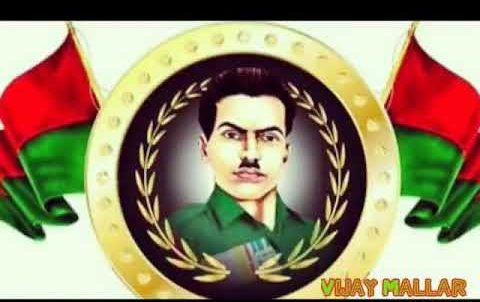
By the 1950s, a few young leaders emerged from the Dalit community. Immanuel Sekaran, hailing from Mudukulathur was one such. A firebrand leader, who gave rousing speeches and inspired the Dalit youth, he had served the Indian Army for a few years and then returned to Ramanathapuram district as a Youth Congress leader. He even organised a conference in Madurai, called the Annihilation of Caste Conference, which was presided over by BR Ambedkar.
Along with Perumal Peter, Immanuel Sekaran formed the Depressed Class Youth League, which identified with the ruling Congress party at the time.
In 1957, horrendous caste violence broke out following the resignation of Pasumpon Muthuramalinga Thevar, the leader of the Forward Bloc party and a key figure of the Mukkulathor community. His resignation necessitated a by-poll. The run-up to this election witnessed unprecedented violence – the Mukkulathor (also called Thevar) clashed with the Dalits. Homes of both caste groups were burnt. Many were murdered, including Immanuel Sekaran. The police were accused of being partisan and of helping the Dalit community unleash violence on the Thevars.
Thevar made several incendiary remarks at public meetings – in Sayalkudi in April 1957, he mocked the police by saying, “the guns of the police are mere stalks of maize.” The police, following the murder of Immanuel Sekaran, shot and killed five Thevars in Keelathooval, and are said to have remarked – “Rifles are not mere millet stalks. If fired, it would kill even Maravars.” The police shooting intensified the caste violence which spread beyond Sivagangai, consuming the southern districts.
The ruling Congress party led by Chief Minister K Kamaraj arrested Muthuramalinga Thevar under the Preventive Detention Act of 1950, and the violence finally came to an uneasy end.
A perusal of the Assembly discussion on the Muthukulathur violence gives an interesting glimpse into how the DMK’s representatives, elected for the first time, spoke on the issue. The DMK had just entered the Assembly for the first time in 1957 winning 15 seats out of 205.
The Opposition parties, led by the CPI’s M Kalyanasundaram and seconded by TL Sasivarna Thevar of the Forward Bloc, tabled a No Confidence motion against the Kamaraj government in October 1957.
Speaking on the motion, CN Annadurai (who would become Chief Minister in ten years), said – “We are discussing him (Muthuramalinga Thevar) as a much-disgusted personality; but the people abroad adore him. It was said Thevar gained prominence because of this caste. Whatever the case, [Thevar’s] influence was great. But when it is said this influence only helped for murder and loots, I ask, was not this influence only helpful to the Congress for 10 to 15 years? … The ministers are now suffering on account of troubles given by Thevar. When Justice Party was to bear all his atrocities, did the Congress utter any word on them? When Thevar was pitted against the Raja of Ramanathapuram in the 1937 elections, as Congress candidate, was not the Raja’s estate manager assaulted? In Thenpandi Mandalam [south Tamil Nadu], by showing him only you threatened Justice Party… You consider him a dangerous person. Why then did you allow this man to grow to such a stature?” (cited in Murder in Mudukulathor, 2017)
Muthuramalinga Thevar, hailing from the village of Pasumpon, was a nationalist, who aligned with Subhash Chandra Bose. He was a bitter critic of the Dravida Kazhagam and the DMK, especially when it came to their views on separatism, parochialism and atheism. This was the DMK’s chance to hit back at Thevar.
Annadurai went on to state – “The Adi Dravidars [Dalits] have suffered untold suffering over time and instead of forestalling the danger that was to come to them, the Congress has set two castes against each other [in East Ramanathapuram] and in view of this, the DMK has lost trust in the government.”
Annadurai also gave free rein to the Dalit members of their party to speak up for Dalit rights. One of these was the firebrand leader Sathyavani Muthu who would go on to become a minister in the DMK government in 1967.
The Dalit representative of Mudukulathur, A Perumal, who belonged to the Congress party, was conspicuously absent from the House proceedings.
CN Annadurai also made a very interesting observation in the House. “I was concerned that our Kazhagam [DMK] did not spread there. Now I think it was good that it did not spread. If it had spread our part in flaring up the caste conflagration would have been suspected.” he said before the House.
The DMK decided to walk out of the Assembly before the vote was conducted. The motion was defeated and the Congress government remained in power.
As long as Muthuramalinga Thevar was alive, the DMK publicly defended the cause of the Dalits. Thanks to virulent opposition from Muthuramalinga Thevar, the DMK was unable to break into the Thevar community votebank. But the DMK moved quickly to fill the vacuum created by Thevar’s death in 1963. They actively built their party organisation in the area, wooing the Mukkulathor or Thevar votebank.
In 1967, the DMK came to power, with CN Annadurai taking oath as Chief Minister. He passed away in February 1969 and Muthuvel Karunanidhi became the CM. He first visited Muthuramalinga Thevar's memorial in 1969. By 1974, it was developed into a memorial hall.
Pasumpon Muthuramalinga Thevar was lionised and turned into a Dravidian icon. Statues of him adorn the state and on his birth anniversary, every political leader garlands them in front of raucous crowds wearing yellow.
Immanuel Sekaran, the Dalit leader who had opposed caste discrimination perpetrated by Muthuramalinga Thevar and his community, barely finds mention in Dravidian-penned history of Tamil Nadu.
He has been quietly erased, a mere footnote to the bloody struggles of the Dalits of southern Tamil Nadu.
Sekaran was among the first casualties to the ruthless political aspirations of the members of the Dravidian movement.
The lesson meant to be learnt by other rebellious Dalits from this episode was that the dominant caste would always be favoured by the Dravidian parties. They were alone in their battle. Because politics and powerful votebanks always came first.
The bitter irony is that, as recently as in 2023, the DMK’s heir apparent, Udhayanidhi Stalin, acted in a film Mamannan (great king in Tamil), which depicted untouchability and the oppression of Dalits in a manner that recalled Immanuel Sekaran’s battle.
Mamannan may have been Udhayanidhi’s last film. But it is the lived truth of the multitudes of Tamil Dalits who found no succour from the DMK and continue to live in segregated colonies in rural areas and in cheris in urban Tamil Nadu.
In Part 2, we look at how even an educated and respected Dalit leader who speaks up for the rights of the community is suppressed if she crosses the line drawn for her by the Dravidian parties.