The disenfranchisement of one-third of Tamils by the “Dravidian model”
How The Dravidian Movement Betrayed Dalits Of Tamil Nadu
Date: 14-Apr-2026
Total Views |


The disenfranchisement of one-third of Tamils by the “Dravidian model”
(Part 02)
By Sandhya Ravishankar
One can easily be fooled by the Dravidian movement’s propaganda – they claim to uphold social justice, self respect, equality and a casteless society. In reality though, the Dravidian movement has disenfranchised Dalits and Brahmins, repeatedly violating their basic human rights over the decades. All in the name of Dravidam.
This is the Dravidian model, as espoused by the DMK, its leaders being instrumental in ensuring that powerful land-owning castes in Tamil Nadu secured their economic and financial status and social capital as Independence arrived.
In essence, the Dravidian movement, under the garb of espousing a casteless society, instead deepened and widened the fissures between communities.
And Dalits were hit the hardest. Not even educated, aware Dalits were spared. Their careers were truncated and they were only allowed to hold positions of power if they toe the line drawn by the Dravidian parties. Here is the story of one such leader who demanded basic human rights for the Dalit community only to find herself erased from the history books.
The Betrayal of the Dalits: Sathyavani Muthu
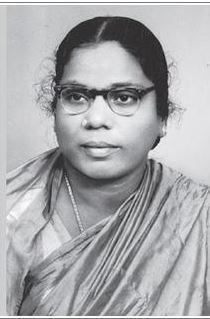
Sathyavani Muthu was a firebrand Dalit leader, a lawyer and independent thinker, determined to uplift the oppressed classes. She was an ardent follower of EVR, a founding member of the DMK and the first woman MLA in the state, taking oath when CN Annadurai became the Chief Minister in 1967.
Scrupulously honest and dedicated to the cause of Dalits, she did not hesitate to question the subsequent Chief Minister M Karunanidhi and confront him with the reality of how the DMK and the Dravidian movement had rejected Dalits.
Sathyavani Muthu was removed as Minister for Harijan Welfare from the party in 1975 and started her own party – the Thaazhthappattor Munnetra Kazhagam – the same year. In 1980, she merged her party with the Anna Dravida Munnetra Kazhagam (ADMK, later AIADMK), when MG Ramachandran split from the DMK.
A bitter Sathyavani Muthu wrote a book in 1981, titled Enadhu Porattam (My Struggles) expressing her disillusionment with the Dravidian movement.
“After the demise of Anna (Annadurai, who died in 1969), caste discrimination reared its head in the DMK,” she wrote. “Every person came forward to support his own caste. Kalaignar (Karunanidhi) was unable to control this. No importance was given to the oppressed classes (Dalits) in the party… if there were no reserved (Assembly) seats, there would be no representation from the community among MLAs and MPs,” she wrote.
She accused Karunanidhi of favouring dominant castes to the detriment of the Dalits. “His words and actions were different. He would give more respect to the upper caste members in the DMK. He backtracked from providing protection to the Dalit community… Kalaignar removed me from my position as a people’s representative because I spoke for the oppressed people,” she wrote.
Sathyavani Muthu was honest to a fault. In fact, the Sarkaria Commission, which probed corruption in the Karunanidhi-led DMK government, lauded her efforts at transparency.
“That in awarding the aerial spraying contract of 1970-71 at the rate of Rs 9 per acre to the operators who were members of the Indian Agricultural Aviation Association, Bombay, Shri. Karunanidhi, being influenced by extraneous considerations, and acting in utter disregard of the norms of propriety, fair practise and good administration, designedly stalled and foiled the rightful move of Shrimathi Sathyavani Muthu, the then Agriculture Minister, to fix the rate at Rs 8.25 per acre, through negotiations with the operators.” (Pg 186 of RS Sarkaria Commission Report)
The bold lady even spoke at an event in Periyar Thidal in Chennai about the failings of the Dravidian movement. She made this speech in front of EVR himself.
“You had said – if you see a Brahmin and a snake, don’t kill the snake, kill the Brahmin first. You were the only one to say this. But through your movement, only a few of those in your presence, wearing black shirts, were able to achieve progress. The oppressed classes (Dalits) continue to remain as they were. The Brahmins do not trouble the oppressed people in any way. The information we get is that it is the non-Brahmins who are torturing the oppressed people.” (Source: Enadhu Porattam, 1981)
A news report in The Hindu of April 04, 1975 quotes Sathyavani Muthu as calling Karunanidhi “Traitor No. 1 to Harijans.” She spoke of how Karunanidhi had “bloated up the concessions and facilities extended to Harijans so much that these people had become the “object of jealousy and hatred” of the other sections of the people.”
Sathyavani Muthu accused the DMK and its Ministers of fanning the flames of discrimination and hatred against the Dalit community.
She also called out the “drama” perpetrated by the DMK in enabling Dalits to become temple priests. “Let alone the Harijans. Can any person from other communities – backward or forward – become a temple priest unless he has basic education in scriptures and undergone special training?” she had said to the press before departing from her post as Harijan Welfare Minister. “If Harijans possessed such qualifications, nothing barred them from becoming temple archakas even now. The need of the hour was to stop the system of hereditary appointment of archakas and not special legislation for Harijans to become temple priests,” she was quoted as saying.
Sathyavani Muthu lashed out at the DMK’s lies in providing schemes for Dalits. On the propaganda by the DMK over their scheme to build one lakh houses for Dalits, she said “But, actually only a few thousands of houses had been built for them. The net result of this publicity
was that Harijans earned the animosity of the others (castes).”
She also pointed out the double standards of the DMK government when it came to reservation. “Out of 99 posts filled by the Tamil Nadu Public Service Commission recently, 18 were given to Harijans, but 69 posts went to backward classes and the balance (12) was shared by the forward communities. When the Commission took pains to exceed the quota (31%) allotted for backward classes, why should it scrupulously adhere to the reservation set for Harijans (18%)?” she is reported to have asked.
A Dalit bringing up specific Dalit issues will not be brooked by a government and a movement that is focussed on bringing non-Brahmin and non-Dalit dominant castes together. Using Sathyavani Muthu’s speech in which she urged Dalit women to have more children and ignore the family planning project at that time, Karunanidhi gave her the boot.
This was also a signal to others to either toe the line politically or else…
In Part 3 of this series, we delve into the next wave of Dalit assertion in Tamil Nadu in the 1980s and 1990s – and how even this powerful movement was quelled expertly by Dravidian politicians.
In Part 1, we looked at the murder of Dalit rights champion Immanuel Sekaran and how the DMK played a pivotal role in brushing it under the carpet, lionising those responsible for the murder instead. You can read Part 1 here.
Sandhya Ravishankar
Sandhya Ravishankar is Chennai based journalist/author with 3 decades of political, social and investigative journalism