Nepal Reviews Oli-Era China Projects, Halts New BRI Deals
Nepal Reviews Oli-Era China Projects, Halts New BRI Deals


The BRI Phase: Strategic Entry and Overcommitment (2016–2018).
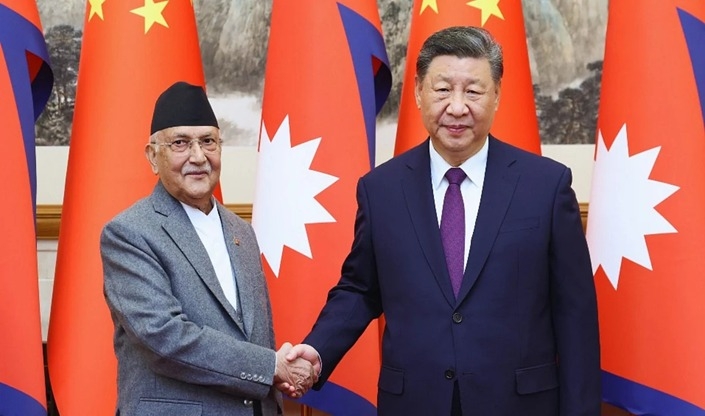
The turning point in Nepal-China relations came between 2016 and 2018, when Nepal moved closer to Beijing under the Belt and Road Initiative. In May 2017, Nepal formally joined BRI, opening the door for large-scale infrastructure cooperation. The Oli government framed these agreements as a historic opportunity to transform Nepal into a regional connectivity hub. However, this period also saw a surge in ambitious commitments that were not always backed by realistic planning or financial clarity. The emphasis was more on strategic signalling than on implementation readiness, creating a foundation for future delays and complications.
Image Courtesy: The Quint
Ground Reality: Projects That Never Took Off.
A closer look at these projects reveals a consistent pattern of stalled execution. The Budhi Gandaki Hydropower Project, awarded to China Gezhouba Group in May 2017 was cancelled in November 2017, reinstated in 2018 and has remained effectively frozen since 2022 with no meaningful progress. The proposed Kerung-Kathmandu railway, announced around 2016-2017, remains at the feasibility stage even in 2026, reflecting both technical challenges and a lack of financial closure. Similarly, the Trans-Himalayan Multi-Dimensional Connectivity Network, launched under BRI between 2017-2018 has not moved beyond conceptual discussions. Cross-border transmission line projects discussed between 2018-2020 remain unexecuted. Infrastructure at the Rasuwagadhi-Kerung border pushed between 2017–2020 has seen only partial and slow development. Northern highway connectivity projects initiated between 2016-2018 remain incomplete, while the majority of BRI-linked initiatives identified during 2018-2019 have not been implemented even by 2026. Digital expansion efforts involving Huawei and ZTE since 2017 have also progressed unevenly, raising concerns over both execution and strategic implications.
Execution Failures: Why These Projects Stalled.
The repeated failure of these projects points to deeper structural issues. One of the primary reasons has been the lack of transparency in agreements which made it difficult to assess long-term financial implications. Many projects were announced without clear funding mechanisms, leading to delays in execution. Additionally, Nepal’s challenging geography has made projects like cross-border railways technically complex and financially unviable. There is also growing concern that some projects were driven more by China’s strategic interests than Nepal’s developmental needs. This mismatch has resulted in a situation where Nepal is left managing stalled commitments without tangible benefits, while bearing the political and economic risks associated with them.
Government Action: Committee to Investigate and Reset Policy.
In response to these challenges, Nepal’s new government has taken a decisive step by forming a committee to investigate all stalled and stopped China-linked projects from the Oli era. The objective is to identify the exact reasons behind delays, assess financial liabilities and determine whether these projects align with Nepal’s national interests. The government has clearly stated that no new negotiations or agreements with China will be initiated until the findings of this committee are made public. This “review-first” approach reflects a shift toward accountability and strategic caution. It also signals that Nepal is no longer willing to accept large-scale commitments without clear guarantees of delivery and benefit.
Strategic Shift: Nepal Prioritises Sovereignty Over Pressure.
This move represents more than just a policy adjustment - it is a broader assertion of Nepal’s sovereignty. By pausing new engagements and focusing on reviewing past decisions, Nepal is sending a strong message that external partnerships must be aligned with national priorities. The decision also reflects a growing awareness of the risks associated with overdependence on a single external partner. While China remains an important regional power, Nepal is making it clear that cooperation must be based on transparency, mutual respect and measurable outcomes rather than strategic pressure or political influence.
Conclusion: A Turning Point in Nepal’s China Policy.
Nepal today stands at a critical juncture in its relationship with China. The decision to investigate stalled projects from the Oli era marks a turning point in Kathmandu's approach to foreign partnerships. It reflects a clear shift from politically driven agreements to evidence-based decision-making. By refusing to move forward without understanding past failures, Nepal is demonstrating a commitment to responsible governance and long-term national interest. The message is unmistakable: Nepal will engage with China but only on terms that are transparent, accountable and beneficial to its people - not on promises that fail to deliver.
References:
3. https://www.orfonline.org/research/chinas-expanding-footprint-in-nepal/