Mystery in Yangon: US Embassy Staffer Found Dead at Hotel, Questions Swirl Over Possible Homicide
Myanmar authorities investigate the death of a US government employee as diplomatic circles await official findings.


Mystery in Yangon: US Embassy Staffer Found Dead at Hotel - Questions Swirl Over Possible Homicide
Death confirmed and limited official comment
The United States State Department officially confirmed the “death of a US government employee” assigned to its embassy in Yangon, but it declined to provide further details, citing respect for the family. Local diplomatic sources and multiple media reports state that the body of a man was discovered at the Sakura Residence + Hotel in Yangon approximately two weeks before the story broke. Myanmar authorities are reported to be treating the case as a possible homicide and members of Yangon’s diplomatic community say a Thai woman has been detained in connection with the investigation. Both Myanmar and Thai officials have so far given very limited public comment, leaving many basic facts unclear.
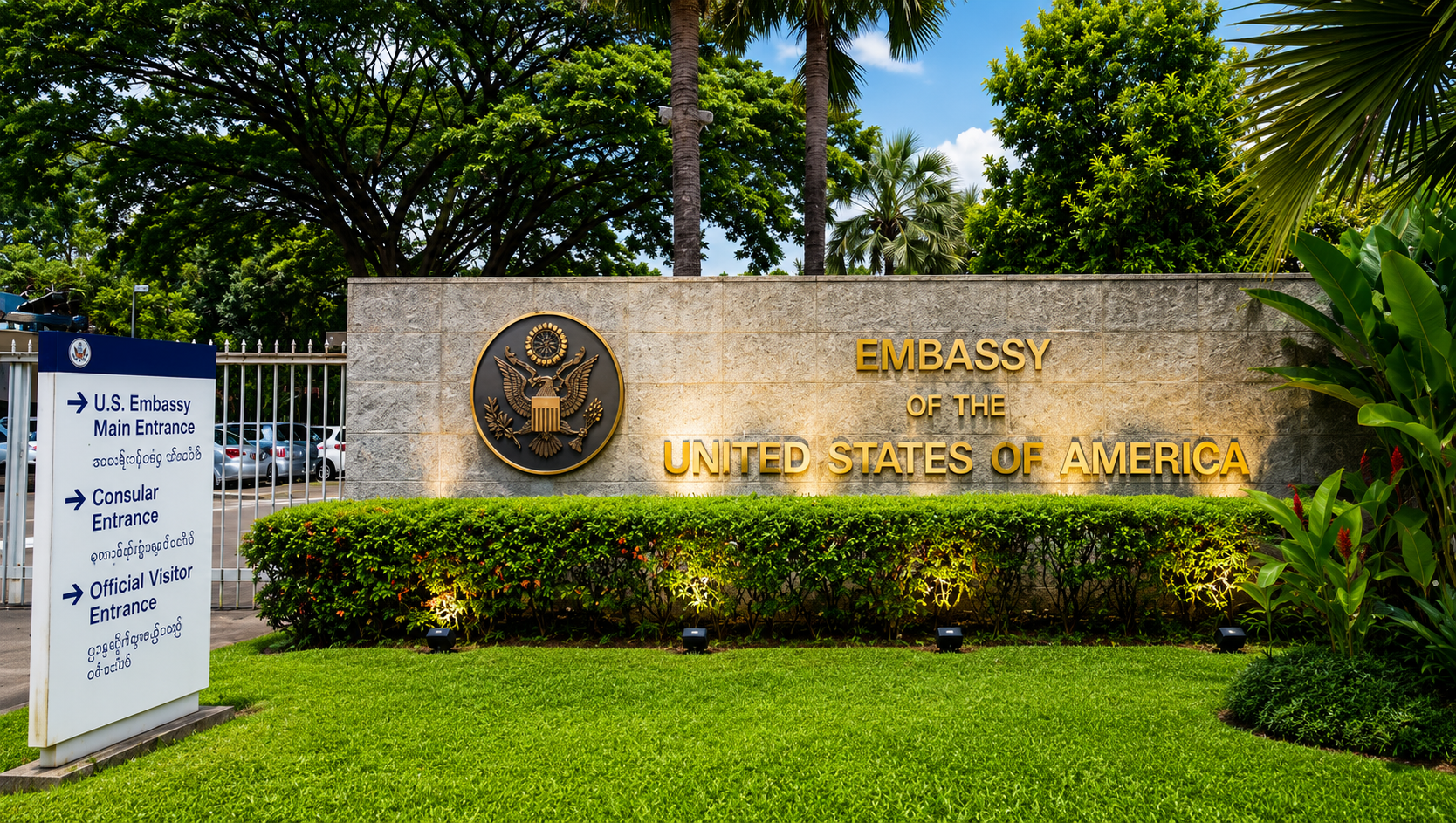
Scene and immediate local response
The Sakura Residence + Hotel, a mixed-use facility popular with diplomats, business travellers and long-term international visitors, sits roughly 1.5 km or about one mile, from the US embassy and is a familiar address for foreign residents in Yangon. Local police officers responsible for the area refused to comment to reporters and the hotel management also declined to provide statements. This pattern reflects how authorities in Myanmar often limit public disclosure about criminal investigations, especially those involving foreign nationals. The lack of information has intensified speculation among diplomats, journalists and local residents who monitor security closely in this politically sensitive city.
Confirmed facts versus circulating allegations
What has been confirmed remains narrow: the State Department’s statement, reports that the body was found in hotel and local claims that police are investigating a possible homicide with at least one person detained. Beyond these facts, much broader and more serious allegations are circulating, including claims that the deceased was involved in sex trafficking networks or served as a conduit supplying weapons to insurgent groups. Those claims remain unverified in reliable public reporting and there is no official evidence supporting them. Stating them as fact would be irresponsible and potentially defamatory, especially without corroborating documents or credible testimony.
Why unverified allegations spread quickly
Rumours and conspiracy narratives tend to proliferate in politically charged environments where official information is scarce. Myanmar’s post-2021 political crisis, heavily constrained media environment and the opaque handling of many criminal investigations create fertile ground for speculation and distrust. High-profile deaths of foreigners further invite sensational narratives about sex crimes, espionage or illicit arms trade, because those explanations are emotionally potent and suggest clear motives even when the evidence is lacking. In such settings, unverified claims can quickly become accepted as “truth” in social media and informal networks, complicating any later attempt at accurate reporting.
Context: Myanmar’s security environment since 2021
Since the military coup in 2021 that removed the civilian government of Aung San Suu Kyi, Myanmar has been embroiled in escalating conflict between the junta and a range of ethnic and pro-democracy armed groups. That insecurity has increased the prevalence of illicit networks in some border areas and complicated law enforcement across large parts of the country. However, the mere existence of arms flows and criminal networks in parts of Myanmar does not, on its own, substantiate claims that any individual diplomat was involved in trafficking or other criminal enterprises. Investigators must separately establish links between specific individuals and illicit activities.
Diplomatic legalities and investigative constraints
Diplomats and embassy staff occupy a legally sensitive position: while diplomacy confers certain protections, host-country criminal investigations still proceed and home governments have established protocols for incidents involving their personnel. The involvement of a US government employee triggers potential coordination between the US Bureau of Diplomatic Security, the State Department and local authorities, but such cooperation and any resulting investigative findings often remain confidential, particularly at early stages. This legal and diplomatic complexity can delay or limit public disclosures, making it harder for journalists and the public to understand the full picture without official confirmation.
How journalists should approach unverified allegations
Responsible reporting starts with a clear separation between confirmed facts and unverified claims. Journalists should seek official records such as police filings, autopsy reports and any formal charges, and ask the State Department whether the Bureau of Diplomatic Security has opened an inquiry. Reporters should attempt to corroborate witness accounts, obtain CCTV or hotel records where lawful, and confirm whether the detained individual has been formally charged. Any allegation involving trafficking, arms supply or similar serious crimes requires documentary evidence, chain-of-custody for seized items or credible witness testimony before publication as fact. Caution is essential.
Lines of inquiry reporters can pursue
Reporters and investigators should request the autopsy or medical examiner’s report to establish cause and time of death; seek statements from local prosecutors about the status of the investigation; ask the Thai embassy whether consular assistance was provided to a detained citizen; and interview hotel staff and residents about the victim’s last known movements. For allegations about trafficking or arms supply, journalists should search customs records, shipping manifests, sanctions lists and any prior legal filings that might reveal patterns or links. However, such documents are often difficult to access in Myanmar and will usually require corroboration from multiple independent sources before being treated reliably.
The evidentiary threshold for serious allegations
Allegations of involvement in sex trafficking or arms trafficking carry heavy legal and reputational consequences and therefore demand high evidentiary standards. Corroboration could include formal charges filed by prosecutors, seized materials authenticated by independent forensics, consistent testimony from multiple credible witnesses, or documentation such as bank transfers, communications records or shipping documents. In the absence of such evidence, responsible media outlets should present these allegations as unconfirmed and attribute them clearly to specific sources. This approach protects against defamation while still allowing the public to understand what is being claimed and why those claims remain uncertain.
Ethical and safety considerations for local partners
Working in Myanmar poses significant risks for local journalists and sources, given the ongoing conflict, political instability and restrictive environment for press freedom. Reporters must carefully weigh the public interest in disclosure against potential harm to sources and adopt secure communication practices. Partnering with trusted local journalists or international NGOs can help navigate access and safety concerns. Editors should also consider the privacy and safety of the deceased’s family when deciding what details to publish. Publishing graphic or insensitive material without clear public interest justification can cause unnecessary harm.
Potential outcomes and public indicators to monitor
The investigation could progress in several ways that would clarify facts: the release of an official autopsy or charge sheet; a public statement from the US State Department or the Bureau of Diplomatic Security; prosecution filings in Myanmar naming suspects and evidence; or, conversely, an official determination that the death resulted from natural causes or an accident. For allegations of criminal networks, subsequent indictments, sanctions or seizure notices would be the kinds of hard evidence that move claims from rumour to substantiated reporting. Until such indicators appear, most details should remain provisional and clearly framed as under investigation.
Conclusion: The balance between scrutiny and responsibility
The death of a US government employee in Yangon is a matter of legitimate public concern, and reporters have a duty to investigate fully. That duty, however, must be balanced against legal and ethical obligations: avoid presenting unverified, potentially defamatory allegations as fact; seek corroboration for serious claims; protect vulnerable sources; and clearly label speculation. Only with careful evidence-gathering and measured reporting can the public be informed without causing unwarranted harm. In this case, the most responsible story is one that acknowledges what is known, explains what is not yet known and shows how facts can be verified
References:
https://www.theguardian.com/world/2026/jun/10/us-diplomat-found-dead-myanmar
https://apnews.com/article/american-diplomat-death-myanmar-351aaa06a18570e93550300145d8d7a2
https://specialadvisorycouncil.org/2023/01/foreign-companies-helping-arm-myanmars-junta/