The Cost of Forgotten History: Bangladesh’s Dangerous Alignment with Pakistan and China
The Cost of Forgotten History: Bangladesh’s Dangerous Alignment with Pakistan and China


Introduction
Bangladesh's commemoration of 14 December as Martyred Intellectuals Day holds profound significance as a solemn reminder of the brutal massacre of the nation's brightest minds during the final days of the 1971 Liberation War. This tragic event sought to obliterate the intellectual and cultural backbone of a nascent Bangladesh, targeting professors, journalists, doctors and other thinkers in a calculated attempt to cripple the country’s future. Yet today, almost 54 years later, Bangladesh’s strategic pivot post-2024 towards closer ties with Pakistan and China risks betraying the very memory of those sacrifices and repeating the cycles of subjugation it fought so hard to escape.
Remembering the Horrors of 14 December 1971
On 14 December 1971, the Pakistani military and their local collaborators launched a campaign to eliminate Bengali intellectuals in Dhaka and other parts of the country. More than 200 intellectuals- including educators, journalists, doctors, writers, and engineers- were abducted, tortured and brutally murdered. This was not a random act of violence but a deliberate strategy aimed at destroying Bangladesh’s cerebral leadership and hampering its nation-building capability. The massacre, occurring just two days before victory was declared in the Liberation War, cast a dark shadow over the birth of independence.
The loss was staggering: universities lost top professors, newspapers lost their bold voices and hospitals lost leading physicians. The impact was felt across society for decades after. Today, the memory of these intellectuals symbolizes the essence of Bangladesh’s hard-won autonomy and identity.
The Emerging Contradiction: Bangladesh’s Post-2024 Strategic Pivot
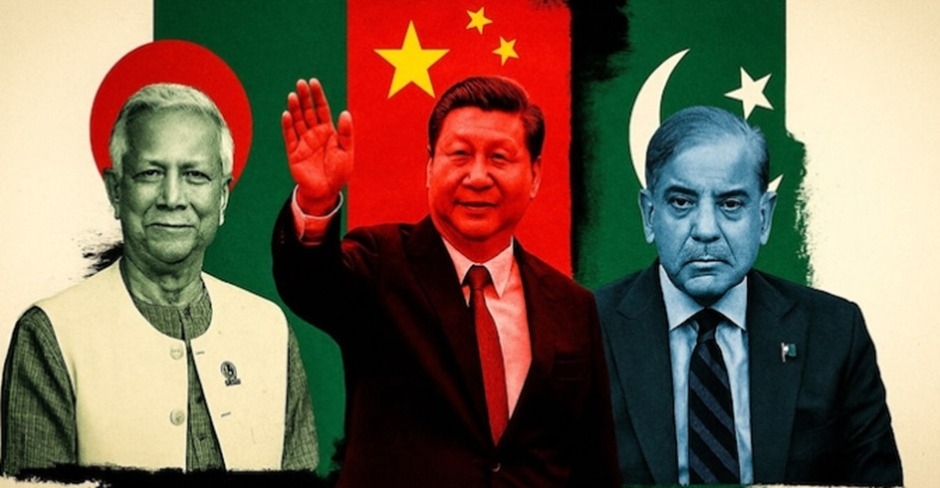
Despite the deep scars left by Pakistan during 1971, recent developments in Bangladesh’s foreign policy highlight a striking contradiction. After the general elections in 2024, Bangladesh government increasingly sought to strengthen defense and diplomatic ties with Pakistan and China. This pivot represents a notable shift from Bangladesh’s traditionally stronger ties with India who had supported Bangladesh’s independence during 1971.
According to official sources, several high-profile defense visits have taken place. In 2025 alone, Pakistan’s Chief of Army Staff visited Dhaka twice, while Chinese defense delegations have signed multiple cooperation agreements, including joint military exercises and infrastructure investments. These moves are framed as pragmatic steps toward diversifying Bangladesh’s strategic partnerships amid evolving South Asian geopolitics. However, these alliances carry deeper symbolic and historical implications that many analysts and citizens find deeply troubling.
The pivot towards Pakistan, given its role as the perpetrator of the 1971 genocide, risks reopening emotional wounds still raw in Bangladesh’s collective psyche. More than three million people were killed during the Liberation War and two million women were subjected to rape by the Pakistani military and its militia groups. The intellectual killings on 14 December were integral to this atrocity. Strengthening ties with the very country that orchestrated such horrors evokes concerns about downplaying that history for diplomatic convenience.
Similarly, China’s role is complex. While China did not engage directly in the 1971 conflict, it was Pakistan’s closest ally and vetoed UN resolutions condemning Pakistan’s military crackdown. Beijing’s strategic partnership with Pakistan continues to include military, economic and nuclear cooperation, raising concerns about regional balance. China’s growing influence in Bangladesh through investments like the Belt and Road Initiative brings economic benefits but also deepens Dhaka’s dependence on Beijing’s goodwill.
Quantifying the Risks to Bangladesh’s Sovereignty
Bangladesh ranks as the eighth-most populous country globally, with over 172 million people in 2025, but remains a developing economy heavily reliant on trade and foreign investment. Its GDP growth averaged around 6-7% annually over the past decade, largely driven by garment exports and remittances. However, its geopolitical landscape is fragile.
Under Muhammad Yunus's interim government, radical networks and anti-India activities in Bangladesh have been revived. A high-level ISI delegation, led by Asim Malik, visited Bangladesh in early 2025, reestablishing operations in Dhaka under diplomatic cover and Cox’s Bazar as a hub for arms trafficking from China to groups like ULFA and ARSA. Ex-Pakistani SSG soldiers run training camps in Bandarban, Sylhet and Rohingya camps for militants including JMB, HuJI-BD, and Ansarullah Bangla Team, fuelling border infiltration into India's Northeast. Yunus's regime has enabled this through expanded military ties, including visits by Pakistan's Navy Chief and Deputy PM Ishaq Dar, allowing ISI desks despite historical terror transit roles. This nexus deepens sectarian divides, with porous borders aiding smuggling and radicalization, straining India-Bangladesh ties amid Hasina's Indian exile.
Martyred Intellectuals Day: A Litmus Test for National Memory
Martyred Intellectuals Day is more than a day of mourning; it is a test of Bangladesh’s commitment to preserving its historical truth and honouring sacrifices. Yet public discourse reveals a growing ambivalence. While official commemorations continue, discussions about Bangladesh’s pragmatic foreign policy often omit references to the genocide’s enduring trauma.
The danger lies in allowing diplomatic expediency to erode the collective memory of 1971’s brutality and the very foundation of Bangladesh’s independence. This can dilute public awareness, weaken national unity, and impair the ethical basis for Bangladesh’s foreign relations.
Strategic Suicide or Pragmatic Realpolitik?
Critics argue that Bangladesh’s post-2024 strategic realignment represents ‘strategic suicide’- a betrayal of the liberation legacy for short-term geopolitical gains. While diversification of partnerships is essential for any sovereign nation, Bangladesh must not cross a moral line by downplaying the historical role of Pakistan or ignoring the geopolitical implications of deepening ties with China at the cost of regional balance.
The historical lessons from 1971 remind us that subjugation often comes through slower, less obvious means: political alignment that compromises autonomy, strategic dependencies that limit freedom of action, and alliances that trade identity for influence.
The Path Forward: Balancing Memory with Strategy
Bangladesh must find a careful balance- honouring Martyred Intellectuals Day by keeping the memory of 1971 alive in public consciousness, education and discourse, while thoughtfully navigating a complex strategic environment. Upholding sovereignty requires vigilance against alliances that might reopen old wounds or compromise independence.
In deeper terms, Bangladesh’s diplomatic manoeuvres should be informed by historical memory as much as by realpolitik. Forging partnerships must respect Bangladesh’s unique identity forged through sacrifice, rather than subsuming it under shifting geopolitical interests.
Conclusion: Preservation of Identity in a Shifting World
As Bangladesh approaches Martyred Intellectuals Day each year, the nation faces a critical crossroads. The memory of 14 December 1971 teaches the importance of vigilance, dignity and justice- principles that must guide foreign policy as well as internal cohesion.
Failing to reckon honestly with history risks repeating it. Bangladesh must resist strategic choices that replicate past subjugations and instead build resilient partnerships that honour the sacrifices of its intellectual martyrs and sustain its sovereignty in the face of regional and global challenges. The legacy of 1971 is a beacon for the future, not a chapter to be conveniently forgotten for fleeting expediency.
References:
https://thediplomat.com/2025/04/reimagining-the-bangladesh-china-strategic-partnership/
https://www.eurasiantimes.com/china-bangladesh-pakistan-axis-rattle/
https://southasianvoices.org/geo-c-co-r-bangladesh-pakistan-china-tri-4-25-2025/
https://www.chathamhouse.org/2025/06/bangladesh-helping-create-geopolitical-shift-south-asia