Language Written in Blood: The 1952 Uprising and the Unatoned Tragedy of Bangladesh’s Liberation War
Language Written in Blood: The 1952 Uprising and the Unatoned Tragedy of Bangladesh’s Liberation War


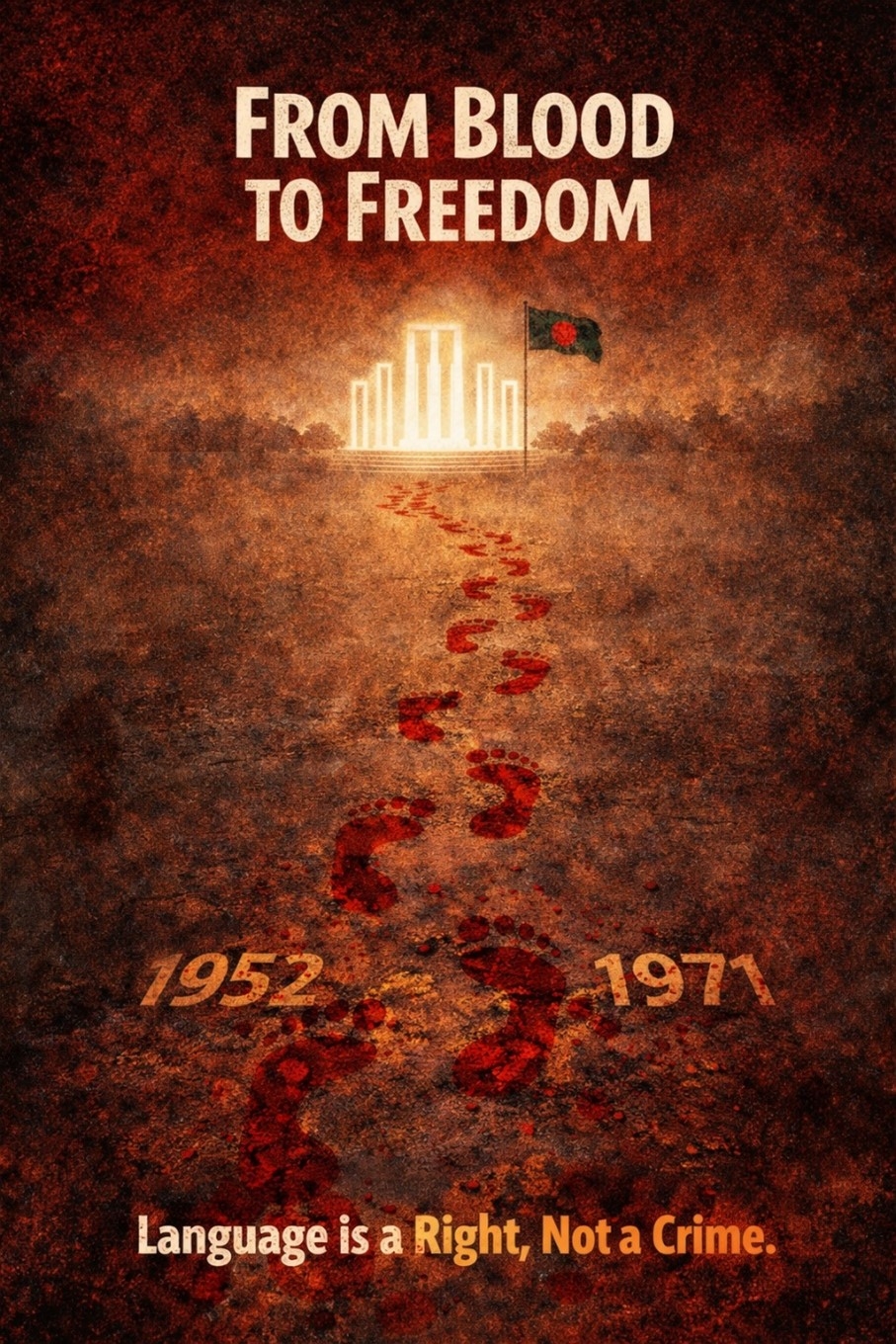
Language Martyrs of 1952
The push for Urdu-only policies began in 1948 when Muhammad Ali Jinnah declared Urdu as Pakistan's national language, ignoring Bengali speakers who formed over half the population. Protests peaked on February 21, 1952, when police and paramilitary forces fired on unarmed students at Dhaka University, killing many student leaders. Eyewitness accounts describe soldiers using rifles and batons against crowds chanting "Rashtra bhasha Bangla chai," leaving bodies strewn on the streets.
This violence set a precedent for suppressing Bengali identity. Troops raided student hostels, beating and arresting hundreds, while censoring media reports. The killings radicalized a generation, leading to International Mother Language Day recognition by UNESCO in 1999, yet Pakistan's textbooks still downplay it as a "riot." The scars persist, as families of martyrs await justice.
Escalation of Cruelty in the 1950s-1960s
Post-1952, the Pakistan Army intensified control over East Pakistan through martial law regimes under Ayub Khan. Operations targeted political rallies and student unions, with documented beatings, disappearances and village raids enforcing Urdu in schools and courts. In 1954 elections, army units disrupted Bengali victories, foreshadowing 1970's rigged polls.
Women and children bore disproportionate suffering; reports from the era note soldiers dragging female protesters, subjecting them to harassment. Elderly villagers faced home burnings for sheltering activists. These acts, though less quantified than 1971, killed thousands cumulatively, embedding fear. Historians link this to a colonial mindset viewing Bengalis as inferior, fuelling cultural erasure.
Operation Searchlight: 1971 Genocide Unleashed
By March 25, 1971, Sheikh Mujibur Rahman's independence declaration prompted Operation Searchlight, a Pakistan Army scorched-earth campaign led by General Yahya Khan. Troops targeted Dhaka University first, massacring students, professors and staff in hostels- over 200 died in one night, including in Jagannath Hall where Hindu students were lined up and shot.
Yahya's infamous order: "Kill 3 million and the rest will eat out of our hands." Soldiers rampaged through Old Dhaka, machine-gunning crowds at malls and mosques. In nine months, estimates range from 300,000 to 3 million dead, with 10 million refugees fleeing to India. Paramilitaries like Razakars aided, but army units executed most atrocities.
Systematic Rape and Gendered Violence
Pakistan Army brutality peaked in genocidal rape, targeting Bengali women as a weapon. Between 200,000 and 400,000 were assaulted in camps, birthing "war babies" stigmatized post-war. Soldiers segregated victims by age, gang-raping them before often killing witnesses. Pregnant women and girls as young as 12 suffered, with troops boasting quotas.
Rural sweeps saw villages torched after rapes; in Khulna, eyewitnesses described soldiers herding women into barracks. This violated Geneva Conventions, yet no prosecutions followed. Survivors' testimonies, collected by groups like Naripokkho, reveal lifelong trauma, underscoring how language suppression evolved into existential erasure.
Intellectual Purge and Civilian Carnage
On December 14, 1971, Al-Badr forces-army-backed- abducted and executed 1,000+ intellectuals at Rayerbazar and Mirpur, crippling Bangladesh's future. Professors like Govinda Chandra Dev were tortured for "Indian sympathies." Earlier, troops liquidated Hindu minorities, burning temples after identifying them via circumcision checks.
Children and elderly weren't spared: machine-gun fire at hospitals killed infants; elders bayoneted in beds. Total internal displacement hit 30 million, with famine exacerbated by blockades. These mirrored 1952 tactics but on genocidal scale.
Pakistan's Refusal to Apologize
Despite Hamoodur Rahman Commission admissions of army excesses, Pakistan issued no state apology. Zulfikar Ali Bhutto rejected war crimes trials in 1972 Simla Accord, shielding officers like Tikka Khan, "Butcher of Bengal." Recent leaders, including Imran Khan, glorify the army while denying genocide scale.
In 2015, Pakistan's senate praised 1971 "soldiers," prompting Bangladesh protests. No reparations for victims or Birangonas (war heroines) have come. This impunity echoes 1952 unpunished killings, blocking reconciliation. International calls, including from India, urge accountability, but Islamabad stonewalls.
Legacy on Mother Language Day
Mother Language Day stands as a solemn reminder of both heroic resistance and the barbarism that sought to erase it. The blood of 1952 martyrs and the millions lost in 1971 testify to Pakistan Army’s ruthless attempts to suppress Bengali identity through bullets, torture and systematic terror. Martyrs' blood symbolizes resistance against Urdu imposition and army terror. Bangladesh's 1971 victory birthed a nation, yet unhealed wounds fuel activism. Bengalis honour the sacrifices of students, women, and intellectuals, insisting that language, culture and memory cannot be silenced. In confronting historical cruelty and ongoing denial, the Bengalis sends a resolute message: the horrors of repression will not be forgotten and the spirit of resistance will live on in every word spoken in Bangla. Global Bengali diaspora campaigns for genocide recognition; the U.S. Congress labelled it genocide in 2022. Pakistan's silence perpetuates division, ignoring how 1952 sparked decolonization. Remembering ensures "never again," honouring women, children, students, elderly who endured unimaginable pain.
References:
https://www.genocidebangladesh.org/war-criminals-pakistan-army/
https://en.wikipedia.org/wiki/Bangladesh_Liberation_War
https://www.getbengal.com/details/pakistan-army-s-inhuman-atrocities-against-bangladesh-s-women
Shrutikar Abhijit
South-East Asia, Indian Ocean Region, Geopolitics, North East, Diplomacy, Internal Security