Minority Persecution in Bangladesh: 1971 to 2026 Violence
Minority Persecution in Bangladesh: 1971 to 2026 Violence


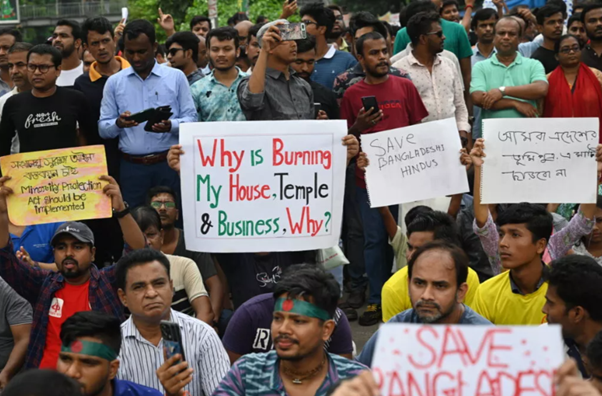
Image Courtesy: https://eastasiaforum.org/
1971 Liberation War: Genocide and Foundational Hatred
The Bangladesh genocide during the 1971 Liberation War set the template for minority persecution, with Pakistani forces and local collaborators like Jamaat's precursors targeting Hindus as "Indian agents." Estimates indicate 300,000 to 3 million Bengalis killed, including disproportionate Hindu deaths, alongside 200,000-400,000 rapes, many of Hindu women to terrorize communities. Operation Searchlight on March 25 razed Hindu areas in Dhaka like Rayerbazar, killing thousands; the Chuknagar massacre claimed 10,000-15,000 Hindus in one day. Jamaat-e-Islami, siding with Pakistan, aided these atrocities, fostering a radical ideology that viewed minorities as threats to an Islamic state.
Post-Independence Pogroms: 1970s-1990s
After 1971 independence, Jamaat-e-Islami rebranded as a political force while sustaining anti-minority terror, capitalizing on power vacuums under military rulers like Ziaur Rahman and Ershad, who allied with Islamists to legitimize rule. Hindus endured over 200,000 land seizures via the notorious Enemy Property (Vested Property) Act-revived in 1975 and expanded- depriving 1.2 million families of 2.5 million acres by 1990, as per Hindu Buddhist Christian Unity Council data. Forced conversions spiked, with 500+ reported Hindu girls abducted annually in the 1980s; temple vandalism hit 300 sites by 1985, including Dhaka's Dhakeshwari. Christians faced church burnings in Mymensingh, claiming 50 lives in 1980 riots.
By the 1990s, BNP-Jamaat coalitions unleashed annual pogroms: 1990 Barisal riots killed 150 Hindus, raped 200 women; 1992 Chittagong clashes razed 40 Buddhist viharas amid Islamist-Karens proxy wars, displacing 10,000 tribals. Ain o Salish Kendra (ASK) documented 1,200+ attacks by 2000, with 400 arson cases and 300 displacements yearly, shrinking minorities amid unchecked radicalism.
2001 Elections: BNP-Jamaat Nexus Unleashed
The 2001 BNP-Jamaat alliance victory unleashed Bangladesh's deadliest minority pogrom, with a judicial commission documenting 18,000+ rapes- many gang assaults like Bhola's Char Fashion island where 200 Hindu women endured overnight horrors- and 500+ killings in months. Jamaat-BNP cadres systematically targeted Awami League-aligned Hindus, looting 10,000 homes, torching 5,000 properties, forcing 475 daily migrations amid mass land grabs. Christians in Dinajpur saw 20 churches vandalized; Cox's Bazar Buddhists reported 50 assaults. High Court probe implicated 25 BNP-Jamaat ministers/MPs in "revenge" for 1971, displacing 200,000 Hindus to India.
2013-2021: Tribunal Backlash and Radical Surge
The 2009 International Crimes Tribunal, prosecuting Jamaat leaders for 1971 atrocities, ignited fierce retaliation as executions began. Ain o Salish Kendra (ASK) meticulously documented 3,679 attacks on Hindus from 2013-2021: 1,678 vandalism/arson cases on temples and idols, 11 deaths, 862 injuries and multiple sexual assaults. Post-Abdul Quader Mollah's 2013 hanging, Jamaat-Shibir mobs razed 50+ temples nationwide; 2014 "blasphemy" rumors- fueled by Jamaat- sparked riots torching 100+ Hindu homes in 20 districts. Christians endured 100+ church assaults, including 2016 Kushtia burnings; Buddhists suffered 200+ vihara destructions in Chittagong Hill Tracts amid radical incursions. BJHM reported 107 Hindu killings in 2017 alone, with 235 temples vandalized, plummeting Hindu demographics further under unchecked Islamist fury.
2025 Crisis: Violence Peaks Under Yunus Interim Regime
Under Muhammad Yunus's fragile interim government formed post-2024, minority violence surged relentlessly through 2025, echoing 1971's "cycle" as per Reports. HRCBM reported 116 minority killings from June 2025-January 2026 across 45 districts- 48% targeted murders, 10% mob lynchings- amid systemic impunity. Bangladesh Hindu Buddhist Christian Unity Council tallied 258 incidents in H1 2025 alone: 27 murders, 20 rapes, 59 temple/church arsons, 87 home/business attacks.
Dipu Chandra Das, 27-year-old Hindu garment worker, exemplifies the horror-beaten to death by a blasphemy mob in December 2025, per HRW and Prothom Alo. Ripon Saha, 30-year-old Hindu petrol pump worker, was crushed to death on Jan 17, 2026 in Rajbari, Bangladesh. Ex-BNP leader Abul Hashem ran him over with an SUV after Saha demanded Tk 5,000 fuel payment. Others like Shyamal Das (lynched in Jessore, Jamaat-linked), 15 Hindus murdered in 45 days per Economic Times, and 10 killings in 51 attacks highlight radical exploitation of instability targeting festivals.
Jamaat's Ideological Drive: Analysis
In 2026's precarious interim governance, Jamaat-e-Islami and allied extremists like Hefazat-e-Islam aggressively pursue an Islamist theocracy, rooted in their 1971 rejection of secular Bangladesh as a humiliating defeat. Their manifestos demand full Sharia implementation- banning "un-Islamic" minority festivals, enforcing burqas, curbing women's mobility and expelling "kafir" influences tied to secular parties-framing non-Muslims as perpetual threats to purity.
Current tactics crush freedoms via "blasphemy" mobs, election-orchestrated pogroms and economic sabotage, exploiting Yunus-era instability: 116 killings and 2,442 attacks since mid-2024 signal radical emboldenment ahead of polls. Hefazat's 13 demands amplify this, with 15,000+ madrassas indoctrinating youth. VIF notes 85%+ Muslim majorities' complicity sustains it, plummeting minorities to 7.95% Hindus (2022)- a deliberate demographic purge enforcing submission under rising extremist hegemony.
Conclusion: Bangladesh's Existential Minority Reckoning
From 1971's blood-drenched genesis to January 2026's interim anarchy, Jamaat-e-Islami and radical allies have methodically executed a 55-year war on Hindus, Buddhists and Christians- killings, rapes, land grabs shrinking Hindus from 25% to 7.95%, Buddhists halved. This isn't chaos; it's engineered Islamization, weaponizing "blasphemy" mobs, Sharia demands, and Hefazat's madrassa networks to asphyxiate secularism under Yunus's fragile rule. With 116 murders, 2,442 attacks since mid-2024 and mob lynchings signalling pre-poll radical apex, Bangladesh teeters: will impunity crown extremists, fulfilling 1971's treasonous dream of theocratic purity? Muhammad Yunus's government must dismantle Jamaat's enablers- prosecute pogrom architects, restore seized lands, protect festivals or witness minority extinction, inviting regional refugee crises and geopolitical fallout. History indicts complicity; 2026 demands justice to salvage Bangladesh's pluralist soul.
References:
https://thediplomat.com/2014/01/islamic-fundamentalists-terrorize-minorities-in-bangladesh/
https://devpolicy.org/the-cycle-of-violence-against-minorities-in-bangladesh-20240821/
https://www.vifindia.org/print/2200
https://eastasiaforum.org/2025/03/22/minorities-in-bangladesh-caught-within-political-upheaval/
https://www.tandfonline.com/doi/abs/10.1080/14729342.2015.1101226
https://albd.org/articles/news/39870/